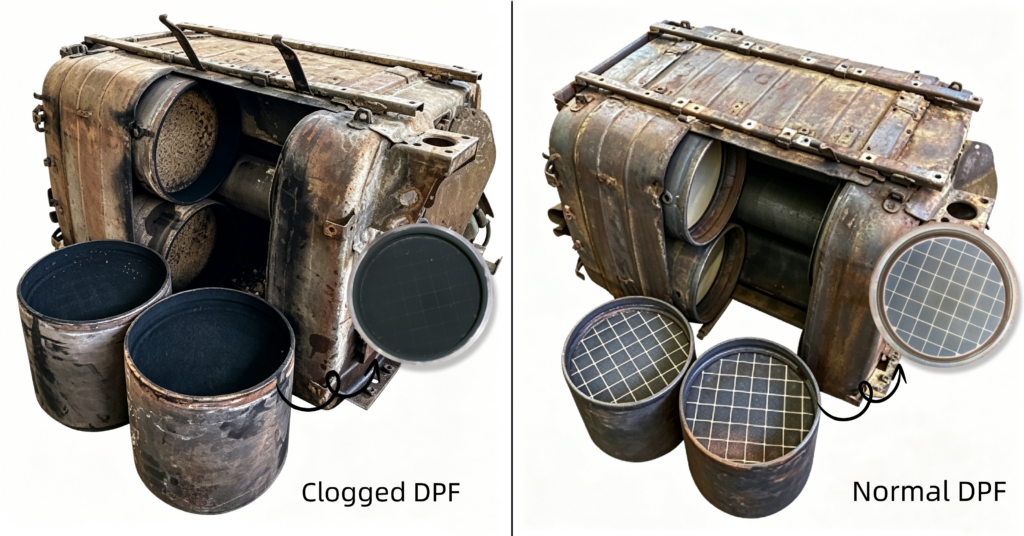
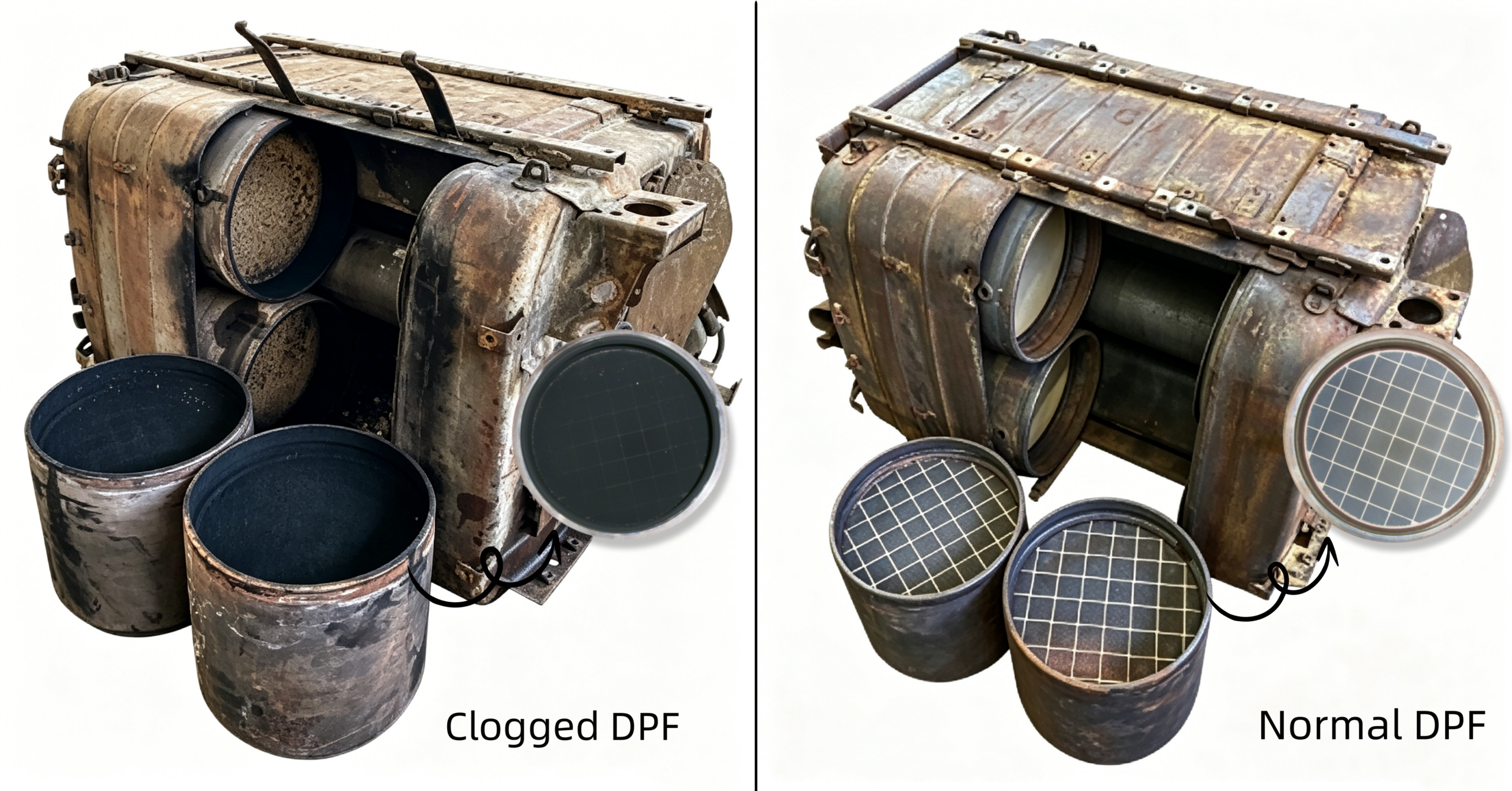
 Three core questions first
1. Why do people end up buying cheap DPFs?
2. Why do some DPFs clog in less than 3 months?
3. What’s the difference between having regeneration capability and not having it?
 Behind cheap DPFs
Precious metals are expensive:
Platinum (Pt): $2,070 per ounce
Palladium (Pd):$1,555 per ounce
Each DPF requires approximately 0.1 – 0.161 ounces of precious metals for coating.
To cut costs, cheap DPFs often reduce or skip the coating (precious metals) altogether → no regeneration function, short lifespan
 Why clog in less than 3 months?
– No coating (or extremely low precious metal content) → no regeneration function
– Soot cannot burn off actively → accumulates quickly on the surface → backpressure rises → clogging occurs
 With regeneration vs. without regeneration
– With coating (sufficient platinum & palladium) → has regeneration function → automatically cleans soot → long lifespan
– No coating or insufficient precious metals → no regeneration function → relies on manual cleaning → frequent clogging
Our solution (we are not a DPF cleaning company)
Choose 300cpsi ACT (asymmetric design) + must have coating (with precious metals)
 Advantages of ACT
– Larger inlet → higher soot/ash load capacity
– Smaller outlet → lower backpressure
– Result: more soot can be stored before regeneration is needed
 Coating = regeneration capability
– With coating (platinum, palladium, etc.) → has regeneration function
– Without coating → no regeneration function
 Euro VI 300cpsi SiC solution – what should customers choose?
– Asymmetric design (ACT), 300cpsi
– Must have coating (with sufficient precious metals to ensure regeneration)
– Not prone to surface clogging
– High soot load capacity
 Bottom line
Choose a coated (with platinum & palladium), ACT, 300cpsi SiC DPF — avoid clogging in 3 months, save on repeated cleaning and replacement costs.